About The Author:

"Roger, The Wine Guy" is Roger Yazell, CWS. He is a member of the International Wine Guild and has had a long time admiration of wine. After careers in broadcasting, advertising and marketing account management, he explored his love of wine in hospitality, wholesale and retail sales. The intent of Roger's Grapevine is to share stories, history and information that will add to the reader's love, enjoyment and appreciation of wine and sake'.

Questions, requests for topics and comments are always welcome via email: rogerthewineguy@gmail.com.

(Note: The Wine Guy is currently undergoing chemotherapy and this blog will be on hiatus for the duration and into a recovery period. The Wine Guy is planning to celebrate his recovery with a trip to the two wine producing regions in Argentina and that should provide for some interesting new blogs. Meanwhile please enjoy the archives and feel free to email in the interim.)

Friday, June 25, 2010

Carr Winery, One to Watch in Santa Barbara!


During our recent visit to Santa Barbara, Mrs. Wine Guy and I did a portion of the Urban Wine Trail in the city of Santa Barbara, revisiting some familiar tasting rooms and seeking some new discoveries. Of those discoveries, the most enjoyable was in a converted Quonset hut on Salsipuedes Street (see photos), the home of Carr Winery.

Owned by Ryan Carr, this winery sources its grapes from a number of Santa Barbara vineyards. All are clients of a vineyard management company founded by Ryan in partnership with Andy Kahn. Ryan learned viniculture and wine making “hands-on” after returning to California from the University of Arizona where he degreed in graphic design. His first wine totaled 10 cases and was made in a garage but today he produces in excess of 3,000 cases annually. In addition to the Santa Barbara’s favorite, Pinot Noir, Carr also produces Pinot Gris, Grenache, Cabernet Franc and Syrah.

His Pinot Noir is flavorfully competitive in a land full of good Pinot Noir and his Paredon Vineyards Grenache was viable, as well, with smooth, supple round tannins and a hint of tobacco on the nose. It was, however his Syrah and his Cabernet Franc which captured most of The Wine Guy’s attention.

The 2007 Carr Vineyards and Winery Cabernet Franc utilizes grapes from two vineyards in the Santa Ynez valley and has a light but appealing nose with good blueberry and herbal flavors. There was a slight acidity to the wine and the somewhat crisp edge to the finish hinted of a wine that was still young in its presentation. The fullness of the tannins suggested there was both room and potential for improvement with ageing. For that reason it was one of the wines I choose to bring home.

Both the Carr Santa Barbara Syrah and the Paredon Syrah offered black fruit flavors accented with spice and distinctive moist leather palpability on the palate. The 18-months of oak aging and slightly higher (15%) alcohol content of the Carr label offered a little more accent on the spice. The Paredon Syrah was very smooth, well balanced and had a pleasant lingering finish. It too made the list for wine to bring home

I learned much of Ryan’s story and history after returning home and researching his background. His dedication to beginning the development of the wine in the vineyard and his work with other growers and winemakers in learning his craft while having his sense of style and purpose remind me a great deal of Eric Glomski of Paige Spring Cellars in Arizona. Both these young developing winemakers deserve to be watched as trailblazers and both have the potential to produce some outstanding wines in the future.

If you elect to the Urban Wine Trail on a future visit to Santa Barbara, make the Carr Vineyards and Winery a must stop on your tasting tour!


A supplemental note from The Wine Guy:

The two Syrah from Ryan Carr were among a group of five enjoyable and very well made Syrah that I tasted during my stay in Santa Barbara. All five had some unique and common flavor characteristics that lead me to believe Santa Barbara has the opportunity to produce a signature style in this varietal.

Wednesday, June 16, 2010

Discovering some sweet whites in Santa Barbara


It’s been at least five years since The Wine Guy visited Santa Barbara Wine country. When I recently took some friends there for an exploration getaway, I discovered a lot of things haven’t changed, but a few have.

The hype over the movie “Sideways” has abated a bit but Santa Barbara still remains a consummate tourist destination, sometimes stopping just short of “kitchsy”. However, even in the highly tourist oriented village of Solvang, there is always abundant things worth exploring and fun to be had. Our entourage, armed with a quick breakfast that included the requisite (and delicious) homemade Danish pastry headed out to explore shopping and wine tasting in a community that offers both in abundance. We made an obligatory stop in one of the great Christmas shops that operates here year around. (Mrs. Wine Guy decorates five trees every holiday season and is always on the lookout for something new!). With well over 100 wineries now listed as members of the Santa Barbara Vintner’s Association and nearly two dozen wine bars and tasting rooms in the tiny village of Solvang alone, there’s much to choose from. Santa Barbara wines are far from limited to the Pinot Noir made famous by the movie. In fact, the variety of wines being offered by Santa Barbara winemakers is very reflective of the wide diversity of microclimates in the region.

At the Mandolina tasting room, the Lucas & Lewellen Vineyards offer a wide sampling of Italian varietals. Co-owner Louis Lucas has a thirty-five year history in the area. His vineyards utilize cuttings brought from Italy and bottled under the Mandolina brand. Mandolina’s bolder Italian reds (Nebbiolo and Barbera), while quite drinkable, offered a little imbalance with a slight tendency to bite or burn on the finish. The best red offering was a nicely balanced, bright cherry Sangiovese with a moderate finish. The room’s standout offering was a Malvasia Bianco, a refreshing, gently sweet and aromatic offering that smacked of apricot and white peach. It’s an unusual varietal for not only Santa Barbara County, but also California as a whole, and, sadly, only four acres of their Los Alamos vineyard are dedicated to this grape.

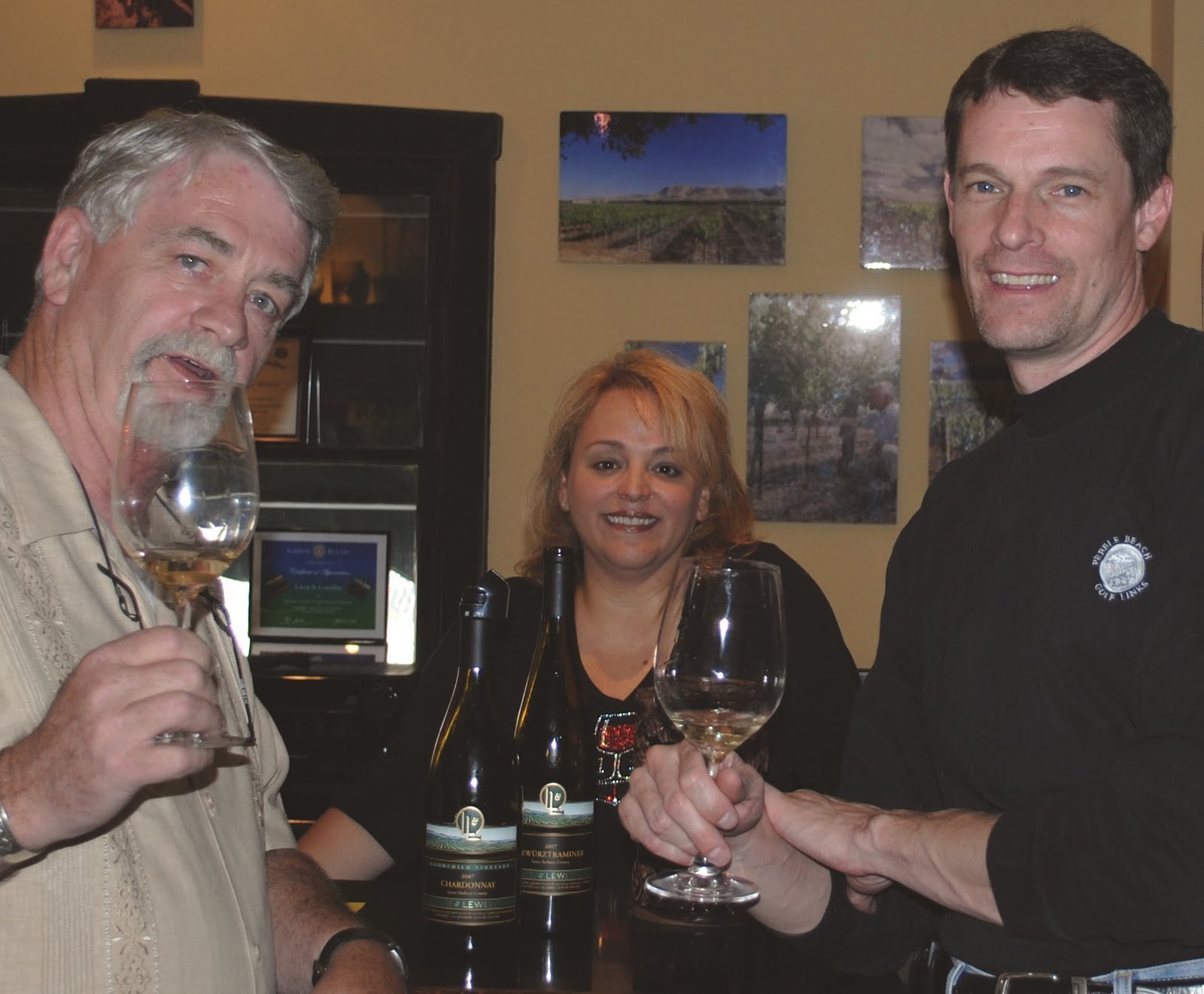
Whites held the day, as well, at the co-owned Lucas & Lewellen Vineyards tasting room just a couple of blocks away. Lemon and orange aromas and flavors were accented with a touch of clover honey in a very respectable late harvest Viognier. We also discovered a pair of excellent aperitifs in two Late Harvest Sauvignon Blancs, both containing a stout 14% residual sugar. The latter, labeled “Sommeil en Barrique” (French for “slept in barrel”) benefited from 12 months aging in French oak barrels. Friend Kent (pictured above with The Wine Guy and our tasting steward) preferred the un-oaked variety while Mrs. Wine Guy and I opted for the greater depth offered by the oaked style. Both went home with us for later enjoyment.

Tasting room visitors may also want to sample the Lucas & Lewellen Silver King Port. It’s an unusual fortified late harvest merlot. It’s fruit forward sweetness makes it nice for serving with chocolate (in fact, the tasting room offers the taste in a chocolate tasting cup). It was a nice dessert offering but probably not the body style that true port aficionados would rave about.

There are a lot of excellent Santa Barbara wines to be found in an area that abounds with great food, good accommodations and great fun but all priced slightly on the high side. Here are a few wines, I’d recommend you sample when you’re in the area:

LaFond Santa Rita Hills Pinot Noir
Stolpman Vineyards Estate Syrah
Foley Rancho Santa Rosa Pinot Noir
Sanford Santa Rita Hills Pinot Noir
Zaca Mesa Vineyards Estate Z-Blanc
Carr Winery Paredon Syrah

There are a number of excellent Syrahs coming out of Santa Barbara County and they have an expression that is somewhat unique to that area. In a blog entitled “Que Sera, Syrah?” (see Roger’s Grapevine archive for blog of 9/30/09), I discussed the ability of this grape to grown in diverse regions and offer great representation of the environment in which it’s grown. There may be a potential for Santa Barbara winemakers to create a signature Syrah for their region.

I have a few more stories to tell in upcoming blogs about our Santa Barbara Wine country visit, including a look at the wines of one of the area’s up and coming young winemakers, David Carr. Please stop back for those and, in the interim, enjoy a great glass of wine.

Saliente!

Tuesday, June 8, 2010

Good Friends, Good Food & Good Wine Make for a Great Evening!


Over the Memorial Day week, Mr. & Mrs. Wine Guy shared an exploration of Santa Barbara wine country with our good friends, Kent and Kara. (pictured above on the left with Mr. & Mrs. Wine Guy to the right) We were both honored and delighted when we were asked to share an anniversary celebration dinner at the acclaimed Stonehouse at the San Ysidro Ranch in nearby Montecito. What an enjoyable evening it turned out to be.

The Stonehouse is a former fruit-packing house now converted to house a pair of restaurants in the ranch’s resort hotel setting. San Ysidro Ranch served as the site for the Lawrence Olivier-Vivian Leigh wedding and for John and Jackie Kennedy’s honeymoon. Its restaurants have won James Beard culinary awards and the wine list has earned a Wine Spectator Award of Excellence. For our friends, for us, as well as countless other couples seeking an ambiance suited to a special romantic occasion, it proved to be a great choice.

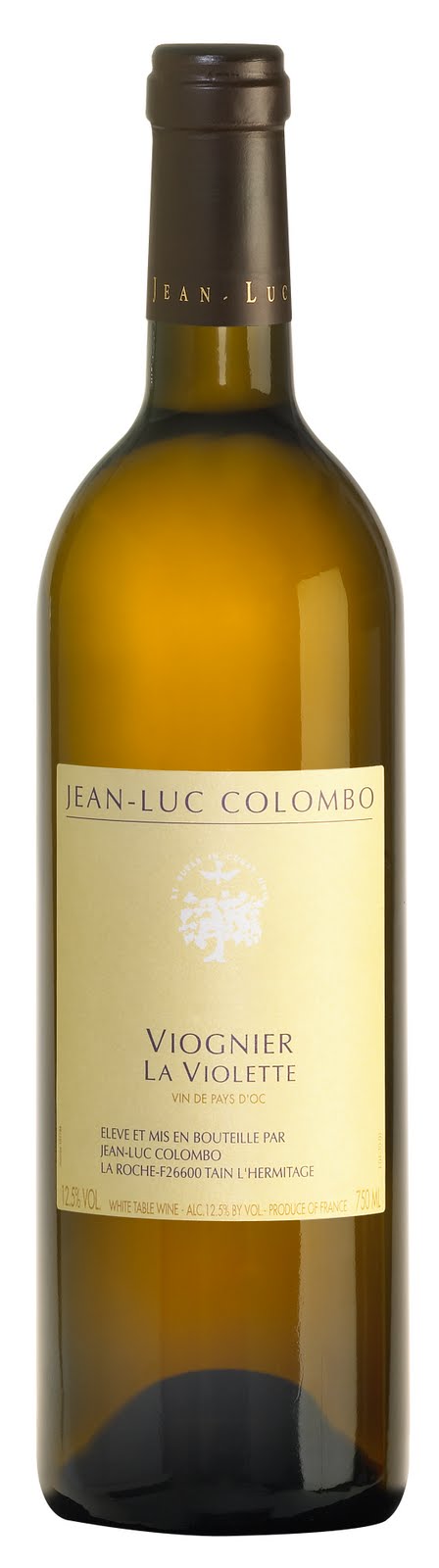
While our friends enjoyed steak and seafood, the fetching Mrs. Wine Guy and I enjoyed a delightfully smooth, rich and creamy spaghetti al limone. Best of all was our paired wine, a Jean Luc Colombo Viognier La Viollette. This very well balanced white offered scents of lemon and honeysuckle on the nose with bright pear, honeydew and peach flavors that blended into the a palate caressing finish. The Wine Guy has long been a fan of Viognier and this wine ranks not only among the most enjoyable but also among as the most unique Viogniers I’ve had.

Uniqueness is an attribute that is often applied to many of Jean Luc Colombo’s wines. This versatile oenologist, vigneron, negociant and consultant has made quite an impact over the past couple of decades in France. Raised in a culinary family (both his mother and grandmother were chefs) he has served as a consultant to scores of French wine growers and winemakers and has been innovative in his own wine growing and wine making methods. He believes in 100% de-stemming and utilization of older vines and lower yields. He also places importance on longer maceration periods, often involving both stainless still and oak vessels for that part of the winemaking process as well as for aging. The result is wines that achieve fruit forwardness without sacrificing elegance and expression of terroir. His wines are usually characterized with great acid balance and drinkability both in their youth and after periods of ageing. I’ve previously enjoyed many of his reds, particularly his Syrah and Cotes du Rhone. This was my first experience with one of his whites and I clearly wasn’t disappointed.

This Viognier is sourced from grapes grown on 20-year old in the Languedoc-Roussillon (Colombo was responsible for introducing the varietal there and not being a traditional varietal accounts for the wine’s Vin de Pays d’Oc designation). 80% of the wine was macerated in stainless steel and 20% in oak barrels. Six months of ageing on the lees followed with 70% occurring in tanks and 30% in barrels ranging in age from one to three years. The resultant depth of fruit expression and creaminess contributes to the uniqueness of this Viognier. It also makes it quite suitable as an aperitif and it may be in that regard that my readers would most enjoy this wine.

For red wine drinkers who want to experience the uniqueness of Jean Luc Colombo’s wines, I would recommend his Les Abielles Cotes du Rhone. If you’re willing to spend a little more, a must try Syrah recommendation would be his Les Means Cornas

To good friends, Kent & Kara, thank you for a wonderful evening and for allowing us the honor of sharing your special occasion. May you be blessed with many more years of happiness together

Thursday, May 27, 2010

Montepulciano d'Abruzzo: Everyman's Everyday Italian Red Wine


Regular readers of Roger’s Grapevine are well acquainted with The Wine Guy’s affinity for both Italian food and Italian wines. While Sangiovese Grosso (Brunello di Montalcino) and Nebbiolo (especially in a good Barolo) will always top my list when asked about my favorite Italian varietals, those are my luxury choices. When it comes to everyday wine, good for pairing with just about any Italian food dish you can name, a must-be-included on the favorites list has to be Montepulciano d’ Abruzzo.

Montepulciano is a high yielding, late harvest grape and the dominant red varietal in the central east coast region of Abruzzo. It produces plump, juicy grapes which somewhat modifies the need for yield reduction in producing good wine. The resultant wines are of deep color with herbal aromas and dark red fruit tastes often touched with a hint of licorice. The tannins are generally softer and suppler and that makes this a very approachable wine for many consumers. While traditionally produced as a wine designed to be drunk quite young, there are many current Montepulciano wines being produced with good age capabilities and characteristics.

The first recorded history of wine made from Montepulciano dates back to 1793 referencing a red wine found near the Abruzzo village of Sulmona. Sulmona is probably better known as the hometown of the Roman poet, Ovid. Commercially cultivated for over 200 years, Montepulciano received its DOC designation as Montepulciano d’ Abruzzo from the Italian authorities in1968. In 1995 an additional designation was granted for Montepulciano d’ Abruzzo Colline Teamano (a sub-region in the northern part of Abruzzo) . That wine was gained DOCG status in 2003. The principal differences lie in blending requirements which permit up to 15% Sangiovese in the Montepulciano d’ Abruzzo but only 10% for the latter DOCG. Montepulciano d’Abbruzzo Colline Teamano also requires some aging on wood (notably, it can be either oak or chestnut) as well as an additional year of aging in order to be designated as riserva.

Montepulciano can also be found as a less dominant, but still principal varietal ingredient in wines from the Marches region, just north of Abruzzo. Those wines are Rosso Conero and Rosso Piceno. The more renown Vino Nobile d’Montepulciano wine is NOT from this area and is NOT based on the Montepulciano grape. It is rather, a sangiovese-based wine that hails from Montepulciano in Tuscany.

Here are a couple of representations of Montepulciano d’Abruzzo that The Wine Guy has enjoyed in the past and that I feel confident in recommending to readers:

Capestrano Montepulciano d’Abruzzo:
This very affordably priced wine is aged in stainless steel and offers a great first entry into the tradition of this grape. It makes a great pasta wine and its soft tannins combine with high reservatrol and antioxidant levels to make it a great sipper for those whose doctors have recommended a regular glass of red wine as part of their cardiac health regimen.

Terra d’ Aligi Tolos Montepulciano d’ Abruzzo:
Produced strictly from old vine Montepulciano grapes, this beauty is typically aged in small French Oak casks for 18 months and then an additional year in the bottle. Here you’ll discover more body and slightly fuller tannins with a lingering finish.

Terra d’Aligi Tatone Montepulciano d’ Abbruzzo:
This wine did 24 months on Slavonic oak with additional bottle aging and has good cellar aging capabilities. The notes of licorice and tobacco sometimes found in Montepulciano become much more pronounced in this wine.

Abruzzo also produces a rose’ (Montepulciano d’Abbruzzo Cerasuolo) which has a very characteristic cherry color and strong red fruit flavors that have warranted some critical acclaim. I’ve yet to encounter this rose’ but have it on my hit list of wines to watch for and try. I would encourage each of you who enjoy Italian cuisine and wines to explore and sample a variety of the offerings of Montepulciano d’Abruzzo. It’s has a great potential to be everyman’s everyday Italian wine.

Friday, May 14, 2010

Lo Siento!


It’s not a particularly flattering photo of The Wine Guy, is it? This shot was taken after a mostly enjoyable but long day in the sun last January in Puerto Vallarta, Mx. I qualified the day as mostly enjoyable because I had discovered just a short time prior to this photo being taken that one of my digital cameras (full of great vacation shots of me & Mrs. Wine Guy as well as a number of great Mexican wine bars) was missing and unrecoverable. I was understandably despondent. It turns out to be the right kind of photo for today’s topic.

The Wine Guy recently and mournfully discovered that he compounded an infringement on someone else’s work. In my blog of 3/30/10 entitled “Petite Sirah, Big Taste From A Little Grape” I posted an image of a Petite Sirah leaf that has turned out to be a purloined copy of a commercial photograph taken by publicist and blogger Jo Diaz. Her image was utilized in developing a 2001 logo for the organization “P.S. I Love You” (PSILY) for which her communications firm Diaz Communications does extensive work. She noted my error in a critique of blogs concerning Petite Sirah on 4/27 on her own blog. In it she wrote:

“Roger’s Grapevine didn’t do the name changing of the image, by the way. I know this image of mine is now out there in www land, but it still fries my butt that it’s become public property without my permission. It’s my intellectual property, period.

She was right to be upset.

I wish naïveté as a blogger was an acceptable excuse, but I should have known better. As a former advertising manager, I’ve dealt with the commercial utilization of images and, as such, should have been more concerned about the need to check for clearance regardless of how obtained. It is, after all, for that reason that nearly all of the images utilized here are of my own taking. I have occasionally resorted to borrowing additional needs from trade friends who have images in their multiple websites and trade materials. However, it should be wrong to assume that releases me from a responsibility to check on the usability and source of what’s provided and to note when I do so.

I’ve erred. While I cannot undo what has been done, I can apologize. I express my regret not only to Jo Diaz, but also to you, my readers. Further, I am disappointed in my own sloppy work ethic. In the future, I pledge a more professional effort to you as readers (and, as importantly, to myself as a budding blogger). Lo Siento (I’m sorry)!

The one positive that has resulted from this recent revelation is the discovery of Jo’s blog: Wine Blog-Juicy Tales by Jo Diaz”. Check it out for yourself at www.wine-blog.org. In a recent posting on wine corks, Jo relates info and experience from her time spent in Portugal. It, as well as many of her other postings, is written in a great story-telling manner while passing on good information. Take time to visit her site and support her efforts.

Thursday, May 6, 2010

Pairing Wine with Food


The Wine Guy has to admit that I approach this blog with a certain amount of anxiety. Pairing wine with food has been one of the most written about, most discussed subjects in the world of wine and probably the most abused. It is also the source of the greatest number of questions we in the wine trade ever get asked about wine. There is a perception among most wine consumers that you have to be an expert in wine to approach this subject and attempt to answer “What wine do I serve with….?” The more I learn about wine, the more I’m convinced of these three things:

1) Wine reaches its best levels of enjoyment when paired with food.
2) Proper pairing of wine and food mainly requires good common sense and a confidence in your own ability to decide what tastes best to you.
3) All the advice you get from wine professionals (including myself) should be treated as guidelines and then tempered by your own taste preferences and experiences.

Sounds terribly simple, doesn’t it? Well it is and, then again, as with all things in the world of wine, it is also varied and complex. Let’s begin with a look at why.

Wine has been a beverage associated with food for thousands of years. At first its alcohol content simply made it one of the safest beverages to drink. It also probably countered the effects of some of the microorganisms that developed on food as it waited to be prepared and consumed. In short, it was highly practical. As both winemaking and food preparation evolved, it became apparent that there were endless tastes and flavors available in both beverage and food. There were also endless combinations possible. Obviously some combinations worked better than others and some didn’t work well at all. We also began to discover that just as the wine modified the taste of food, the food modified the taste of the wine. Thus began the long arduous examination of what wine goes well with what food. (So far, the common sense part seems obvious, doesn’t it?) The big variable that enters this equation is you and I are the consumers of both products. Just as each of us who eats a particular food dish has a different taste experience, so does each of us who sips a particular wine. It would follow that our reaction to the combination of those flavors varies as well. What works well for me may not for you and vice-versa.

So where do we begin? Let’s start with some general (and sensible) guidelines that will assist and help you in exploring and discovering your own preferences and favorite combinations. I use the word sensible because there are many guidelines floating out there that perpetuate the myth of “only certain wines go with certain food”. Chief among these is the old “white wine with white meats, red wine with reds meats”. What Bunk! While I don’t count myself, there are many wine consumers who prefer to consume just whites or just reds. While some of us think you’re unnecessarily restricting yourself, there’s nothing wrong with that. Certainly you can (and should be able to) find many different wines that will pair well with any just about any food you choose to enjoy. I’ve found reds that pair well with poultry and whites that were highly enjoyable with a steak. The perpetuated myth of “the perfect wine” with each food dish is just that: a myth.

Here are some guidelines that may serve you well:

Guideline #1: Always choose a wine you would enjoy anyway:
Good chefs will tell you to never cook with a wine you wouldn’t drink. The same credo applies to accompanying your food with a glass of wine. Just because some expert listed a particular wine as his best pairing with a certain food doesn’t mean there aren’t others. If it’s not your kind of wine, move on and look for another pairing.

Guideline #2: Wine can either complement or contrast the flavors of food you pair with:
Both situations can be enjoyable. You must decide which job you want the wine to perform. You may choose either effect at different times. (Variety is, indeed, the spice of life!) Just as you may sometimes choose to accent a dish with spices that add a new flavor to the dish you’re eating or sometimes you may add a spice that brings out the basic underlying flavor of the food, you can do the same with the wine you choose.

Guideline # 3: Watch your alcohol content, particularly with spicier foods:
High alcohol content in wine will sharply accent hot spices in food and vice-versa. Utilize lower alcohol wines with spicier food. If you’re looking for a contrasting wine, choose one with a little more sweetness or fruity characteristics to balance the hot spices.

Guideline #4: Watch your level of tannins with milder dishes:
Bold and flavorful tannins can rapidly overpower very mild dishes. Keep in mind that tannins also come from the wood that wine is aged in as well as the parts of the grapes, so this proviso is not just restricted to reds. It is possible for a heavily oaked chardonnay to make a succulent, baked turkey taste as flavorless as cardboard.

Guideline #5: With a complex meal, you may want to choose a palate cleansing wine:
When there are a lot of different dishes on the table, you may want to choose a wine that will refreshingly rinse the mouth and reset the taste buds for the next course or bite of food. Sparkling wines, for example, fit this purpose very well and also add a sense of festivity.

Note: For the same reason, The Wine Guy usually serves lightly chilled water with his wine when he has guests for dinner. Knowing everyone’s taste buds react differently, I want my guests to have the opportunity to be address the different taste combinations they may experience with the wine and the food that is offered.

Guideline #6: For dessert, make it sweet or make it a finale:
Wines served with dessert should generally be sweeter than the dessert itself; otherwise the sharper characteristics of the wine (acidity, tannins, etc) will be accented and come to the foreground and alter the basic taste of the wine. Optionally, go for a palate cleanser with complimentary flavors.

Guideline #7: It’s O.K. to pair more than one kind of wine with your food:
Set an extra glass or two at your table and open more than one kind of wine. It’s not only fun, it helps address the many different palates around your table when you have guests. And, as you develop your own sense of pairing combinations, it can also add to your variety of enjoyable experiences with the meal. It always amazes me that people will pay exorbitant prices for special wine pairing dinners at restaurants offering multiple wines but remain reluctant to that on their own. You can affordably have a similar, if not better (because it’s based on YOUR taste preferences) at your own table once you learn the basics and follow your taste buds.

Guideline # 8: When seeking advice, let your advisor know what you prefer in wine:
Whether it’s a waiter or sommelier in a restaurant or your steward at the local wine shop, let the person you ask know what kind of wines you prefer. If necessary, also relate how your food is being prepared. Without this information, his recommendation will be based solely on his own experiences and taste preferences. If he is professional, he’ll modify his first instinct based on the information you give him. As a result, you’re more likely to get a wine pairing that you will truly enjoy.

Guideline #9: When in doubt, go to the source for food pairing ideas:
When looking for a pairing for a particular dish or cuisine go that region of the world where that food is famous and look at the most popular wines of the same area. These wines probably developed there (this is most particularly true in the Old World) because for most of the people there, they pair well with the food. As examples: Riojas or Grenachas are good with the traditional tapas of Spain. The pastas and game dishes of central Italy pair well with the Sangiovese and Montepulciano wines found there. Lamb dishes are popular in both Greece and Australia. Naoussa is the best selling red in Greece and Shiraz is the best selling red in Australia and it’s no coincidence that both pair wonderfully with lamb.

O.K. these are some rough guidelines. To see how they apply, let me share with you some of The Wine Guy’s preferred food pairings. Remember these work for me, but may not for you. I offer them as an overview. You may discover different wines under the same guidelines that work as well, if not better, for you.

The Wine Guy’s Go-To pairings:

Pasta with red/meat sauces:
Try Italian Chianti, Montepulciano and Sangiovese blends or Nero d’Avola

Pasta with creamy/vegetable sauces:
Italian Pinot Grigio is a natural choice but I also enjoy a good New Zealand Sauvignon Blanc with these and for a red, try a South American Carmenere

Baked or roasted Poultry-white wine Choices:
French Chardonnays (Pouilly-Fuisse or Macon Villages), Argentine Torrontes

Baked or roasted Poultry-red wine choices:
Spanish Monastrel, French Burgundy or Chilean Pinot Noir

Plainer Shellfish Dishes:
South African Chenin Blanc (especially good with shrimp stir-fry), Greek Assyrtico, French Vouvrey

Saucy or buttered shellfish dishes:
Creamy, buttery California Chardonnay, or Gewürztraminer

Salmon dishes:
Nothing for me quite beats a good Oregon or California Pinot Noir especially if the salmon is grilled.

Whitefish dishes:
Spanish Albarino (my favorite with baked Halibut), French Cotes du Rhone Blanc or any good Viognier

Mexican Food:
Nebbiolo based wines, South American or California Merlots, Spanish Mencia (Bierzo)

Pork dishes:
French Cotes Du Rhone, French or South African Dry Rose or any good Pinot Noir (especially if the dish has a mushroom sauce glaze).

Chocolate Red Layer Cake:
Italian Brachetto, this raspberry flavored sparkler goes great with the chocolate and refreshes at the same time.

Cheeseburger & Fries:
Extra Dry Spanish Cava (Seriously, I am not kidding. I was amazed about 15 years ago when I discovered the Miami Subs chain in south Florida offered a high-end champagne. I was more amazed when I saw how many people ordered it. Finally, I was stunned when I tried sparkling wine with fast food for the first time!) I deliberately put this example in to illustrate that you can really go where your taste buds dictate and will allow you to go when it comes to food pairing.

Finally, two of my pairings that are not wine, but the same principle and guidelines apply:

Spicy Thai dishes & Asian food:
A wonderful pairing with these dishes is Sake’. For the spicier dishes, I trend toward the sweeter and softer on the palate Nigori (or unfiltered) sake.

Roasted Turkey Sandwich with Blue Cheese sauce:
Regular readers will know that this is called a “Dirty Bird” and is featured at my favorite pub & deli in Atlanta. It pairs wonderfully with a Trippel Ale. However, I usually order it with a Canadian La Fin du Monde, an equally marvelous pairing of beer and food.


It’s been a longer blog than usual, so allow me to recap:


A. Each of us brings different taste preferences in both food and wine to the table.

B. Because of that, “the perfect wine” pairing for any food item is different for each of us.

C. Treat advice from experts as a guide to get you started on food pairing and temper that with your own experiences.

D. Always pair with food a wine you would probably enjoy anyway.

E. Taste, taste, taste. Use common sense to guide you in experimenting with new combinations. Then let your taste buds direct you from there.


Finally, wine is wonderful with food. Have a wonderful experience soon!

Thursday, April 29, 2010

Acquiring new tastes in wine requires tasting new wines!


Wine is one of the loves of my life and that love is the primary reason I do this blog. My first and greatest love also gets mentioned here frequently and that’s the fetching Mrs. Wine Guy. (pictured above with The Wine Guy last fall in Queretaro Santiago, Mexico) Today I get to relate a story that combines both. It also serves as a reminder to The Wine Guy that no matter how much you know about wine, another person’s own palate is always their best guide to exploring and trying new wines.

The Wine Guy is fortunate enough to be one of those people who loves all kinds of wine. To date, my samplings range in the four figures and I can honestly say that of all those, I can count the wines I would never try again on one hand. While I have my favorites, I love them all! That’s not usually true for the typical wine drinker and it certainly wasn’t true for the fetching Mrs. Wine Guy when she first began to join me in my exploration of wines a few years ago. She was a dedicated and selective white wine drinker. Her preferences were mostly restricted to fruitier, lighter, softer and generally sweeter whites.

In an attempt to open up her horizons and get her to explore the wonderful world of red wines, I arranged for a custom tour of Russian River Valley wineries with knowledgeable tour guide Gene Warren of Healdsburg Area Winery Tours.
(For more on using a winery guide see the archived blog “Learn More Taste More” from July 19, 2009).
I had explained to Gene my desire to get my better half to “come over to the dark side” and enjoy the wonders of red wines along with her beloved whites. We planned a strategy of visiting wineries known for some fuller bodied whites, some great rose’s and, of course, some excellent Pinot Noir.
I assumed that I should “transition” her palate by exposing her to some softer, less bold selections in the new arena I wanted her to adopt. Although we succeeded in getting her to nod favorably to a couple of excellent chardonnays from Miramar Torres and Hartford, our efforts in finding a red wine she could warmly embrace fell flat.

The following day, we were on our own, revisiting some Sonoma wineries and picking up some favorites from a trip the year before. At one stop, I mentioned my desire to sample a Sangiovese (The Wine Guy has always been partial to a good Italian varietal). Mrs. Wine Guy uttered a simple “I’ll pass” but elected to have a sample of my tasting when I expressed my enjoyment of the wine. It took barely a sip for her to demandingly inquire “Why haven’t you told me about this wine before?” The following year, while in Italy, I marveled as she expressed her delight at the sampling of some of the great Tuscan reds she enjoyed, including a wondrously well-aged Brunello in the cellar at Il Greppo, the Biondi-Santi estate outside Montalcino. Today, she has truly “come over to the dark side”. The “then and now” list below of her most favored wines reveals the depth of that transition:


Mrs. Wine Guy’s five favorite “Go-To” wines seven years ago:
Schmidtt-Sohne Piersporter Michelsburg QbA
Husch Vineyard Gewurztraminer
Navarro Vineyards Edelzwicker
Dry Creek Vineyard Chenin Blanc
Casa Rondena Serenade

Mrs. Wine Guy’s five favorite “Go-To” wines today:
Castelli di Querceto Chianti Classico
Loacker Val di Falco Morellino di Scansano
Santa Ema Reserve Cabernet Sauvignon
Allegrini Palazzo Della Torre
L.A. Cetto Nebbiolo Reserva Privada

Wow, What a change that’s been! What’s marvelous is that Mrs. Wine Guy now enjoys many different styles of wine. Yes, she still returns to and enjoys some of her whites but she also appreciates many more. Today, we enjoy sharing our exploration of the world of wine in more ways than we ever thought possible. It also taught The Wine Guy some valuable lessons.
Among those are:

1. Never presume to “know” what someone else might enjoy in a new wine based solely on what they prefer today.
2. Recognize that palates can change and adapt to enjoy many different and unique flavors.
3. In wine, as with many other things, variety is the spice of life.

I hope you enjoyed the story. I shared it with my readers to encourage them to take risks and to occasionally try something unique and different as they explore the world of wine. A Master of Wine once told me shortly after my first certification that sooner or later, people would ask me “How do I tell when a wine is truly a great wine?” He suggested answering simply “When the wine tastes great enough to you to make you immediately say: “Wow, what a great wine!”… then it’s a great wine. Keep trying new wines and trust your taste buds. Sooner or later, they will lead you to some wonderful discoveries in the world of wine. And don’t be surprised if those discoveries are never-ending. There are thousands of different wines out there, each with a unique flavor to enjoy. Your possibilities for enjoyable discoveries are almost endless.

Here’s hoping your next great wine discovery is just around the corner!

Thursday, April 22, 2010

Cava, Spain's Sparkling Contribution To The World of Wine!


While not entirely inaccurate, referring to Cava as the Spanish Champagne is a somewhat unfair description. This widely distributed sparkling wine shares a common method of production with the renowned French bubbly but it distinguishes itself with the utilization of its native Spanish grapes, Macabeo, Parellada and Xarel-lo. In recent decades, it also occasionally utilizes some additions of Chardonnay, Pinot Noir and Suribat (a sub-varietal of Malvasia). There may be additions of Grenacha and Monastrell as well.

French Champagne traditionally relies on Chardonnay and Pinot Noir as its mainstays and traces its roots to a French monk. Dom Perignon developed the production methods while on assignment from his abbot to discover why bottles of the abbey’s wine frequently exploded in the cellar. For that reason, Dom Perignon is credited with being the founder of sparkling wine despite the fact that an English scientist ((Christopher Merrett) presented a paper on creating a sparkling effect in wine years before the French monk was sent downstairs by his abbot.

There are notes of Cava wine in Spain dating back to the time of Roman and Greek visitations to the Iberian Peninsula. However, those may be a reference to fine still wines that were stored in caves. Modern commercial production of Spanish sparkling Cava is generally accredited to Josep Raventos, a descendant of the Cordorniu and Raventos wine families. Their history in Spanish wine dates to the early 1500’s. Josep, after visiting France, applied the method champenoise to native Spanish grapes and today, Cordineau, along with Freixenet (also formed with the merger of two old Spanish wine families) have alternately laid claim to being the world’s largest producer of sparkling wines. Both have worldwide distribution and followings. Freixenet, through its acquisition of other Spanish producers including Rene Barbier and Segura Viudas probably offers a greater variety of products to choose from.

Spanish Cavas have a similarity in style to Champagne but because of the different mixture of grapes, displays some differences in flavor and structure. Good aficionados of wine will recognize that Cava and Champagne are different and celebrate what each has to offer in much the same manner as they recognize the differences and celebrate the separate offerings of Left Bank and Right Bank Bordeaux. Typically, Cavas are light and crisp in style with a tendency toward nuttiness and some light floral accents. It may well find its depths of flavorful expression in Cava Rose’. Cava also has an affordability factor that has lead to its wide popularity. Not unlike their Champagne cousins, Cavas are fanciful, festive, zesty wines. They make great aperitifs, delightful bases for wine cocktails and are ideal for celebratory toasting.

Here are a few suggestive hints from The Wine Guy if you have a yen to explore the world of
Spanish Cava:

Cordorniu Classico Brut:
This is a traditional blend of the three Spanish grapes Macabeo, Parallada, and Xarel-lo. Look for apple flavoring with hints of almonds in the bouquet.

Jaume Cordorniu Brut:
Here Chardonnay is added to Macabeo and Parellada. The result is the addition of biscuity notes to green apple flavorings. Look for some nuttiness and hints of honey on the finish.

Cordorniu Pinot Noir Rosado Brut:
This is 100% Pinot Noir, a fairly modern addition to Cordorniu’s lineup of products. It has great strawberry and raspberries flavorings in a dry, crisp sparkler.

Freixenet Cordon Negro Brut:
A traditional Cava and Freixenet’s first flagship export. Look for green apples laced with citrusy overtones and a crisp finish.

Freixenet Casa Sala Grand Reserva Brut Nature:
Well-aged and one of the driest Cavas (Brut Nature has no additional sugar included with the dosage utilized to initiate secondary fermentation)

Jaume Serra Cristalino Extra Dry:
Sparkling wine regulars know that Extra Dry is slightly sweeter than Brut (don’t let the name confuse you if you’re new to sparkling wine). This wine layers lemon-lime overtones on green apples and has a lingering finish. The Wine Guy usually suggests an Extra Dry as opposed to a Brut for making Mimosas.

Segura Viudas Brut Reserva:
Aged in the bottle for nearly three years, this wine has a light floral nose, a mineral, yet creamy, undertone to its dried apple flavor and is accented with a spicy finish.

Segura Viudas Reserva Heredad:
Noted for being an estate wine Cava and for only utilizing the first pressing of the grapes, this wine is aged up to four years. It has ripe apple flavoring accented with light citrus, peach and a sense of nuttiness on the lingering finish. It has a unique pewter edged and crested bottle, which makes it a favorite for gift giving. If you only try one Cava, make it this one.

A couple of final hints and notes:

As with all sparkling wine, the sweeter the wine, the cooler it should be served. The order of Cava from dry to sweet goes:

Brut Natural
Extra Brut
Brut
Extra Dry
Seco
Semi-Seco
Dulce

Just as there pretenders to good Champagne, so are there for good Spanish Cava. 95% of Cava comes from the Penedes in Spain’s northwestern Catalunya region. Authentic Spanish Cava can be verified by the four-pointed star printed on the cork bottom.

While some Cavas are aged before release, they are very much meant to be drunk young. Do not hold for extended periods even if refrigerated.

Go ahead…find a Cava, chill it, pop the cork and enjoy the essence of Spain’s sparkling contribution to the world of wine!

Thursday, April 15, 2010

Nebbiolo: "A finicky grape that makes fabulous wine"


Wine consumers who have seen the movie “Sideways” may well remember Miles elaborating on the difficulty in growing Pinot Noir and the care needed in making a good Pinot Noir wine. There is, however, another grape that outdoes this popular grape in being “finicky” to grow. It also presents bold challenges in winemaking but it rewards the patient with some of the best aromatic and best aging wines in the world. That grape is nebbiolo.

Nebbiolo is principally grown in the Peidmont region of Italy but is also utilized in Italy’s Lombardy and Valle d’Aosta regions. In some parts of Italy, it also answers to the names Spanna, Picutener and Chiavenessa. There is some debate over whether the Nebbiolo name derives from the Italian word “nebbia” which means fog or the Italian word “nobile” meaning noble. Certainly the presence of fog in the regions where the best example of Nebbiolo wines comes from is a factor in the quality of grapes harvested (not unlike Miles’ beloved Pinot Noir!). There is also a milky clouding to maturing Nebbiolo grapes that could be described as fog-like. The noble connotation would certainly apply to the quality of the wines produced and to its historical regard, particularly by the British prior to the phylloxera epidemic of the late 19th century. Prior to that, many Brits had turned to Nebbiolo as an alternative to fine Bordeaux as their many conflicts with the French made them seek viable alternatives.

Today, however, Nebbiolo accounts for only single digit percentages of the vineyard grapes in its Piedmont homeland but it does produce some of its finest wines. Nebbiolo d’Alba, Barolo, Babaresco, Gattinara and Ghemme are among the wines that owe their strength and character to this grape. This grape produces lightly colored but bold wines that can be highly tannic (and, sometimes almost bitter in their youth). They are always aromatic, even more so with ageing and the wines can take on a uniquely characteristic reddish-orange hue at the edge as they age. Aromas and flavors that have been identified in these wines include, Roses, violets, tar, wild herbs, red fruits, truffles, tobacco and even rich prunes. The wines are often capable of developing after ageing for more than a decade.

The terroir in the Piedmont is very well suited to this grape, as it grows best in highly calcareous soils. It is a grape that is very early to bud but very late to harvest. Harvest occurs in mid to late October, when the weather is colder, not only challenging the harvest but the length of time required in fermentation as well. (Modern technology has helped address some of that difficulty but most Nebbiolo winemakers moderate the usage of technology controls during fermentation as it tends to weaken some of the stronger characteristics of the grape.) It also susceptible to buds not developing into fruit especially if exposed to a lot of wetness during the bud development stage. Excessive wetness during ripening can also have a negative impact on the quality of the grapes. Add to that a genetic instability that makes it prone to mutation and you’ve got a grape that is very challenging to grow and very challenging to make wine from.

Patience and effort are usually rewarded, however, with some of Italy’s finest red wine. The best Barolos can challenge Brunello di Montalcino for the right to be called the King of Italian wines. They are bold, expressive wines, with long, lingering finishes and rival Brunello in the ability to age and develop when properly cellared. Barollos must be aged a minimum of 1 year in oak and 3 years in total with 57 months required to achieve Riserva status. The lighter Barbaresco requires 9 months on oak with 21 months total aging with 45 months needed for a Riserva. The care and time needed in these wines plus their limited production does add to the cost. While many good examples can be found under $40.00, the cost of the very best of these wines rises rapidly and may reach into the four-figure range.

Italy is the primary source for Nebbiolo and certainly the dominant one in terms of both quantity and quality. Scatterings of Nebbiolo have occurred in Australia, California, New Zealand, Argentina and South Africa but with very limited acclaim as to the results. The most productive area for Nebbiolo outside Italy is Baja Norte in Mexico principally under one producer, L.A. Cetto. The Nebbiolo Riserva produced there is also quite singular in having achieved a consistent measure of critical acclaim. Many of my fellow bloggers have referred to it as the best Nebbiolo made outside Italy. I would concur. I also don’t mind its affordability when I can find it.

Here are a few other affordable recommendations from The Wine Guy for wines you may want to try if you’re interested in exploring Nebbiolo.

Michele Chiarlo Barolo Toroniano

Michele Chiarlo Barbaresco

Produttori di Barbaresco Nebbiolo Delle Langhe

Pio Cesare Nebbiolo d’ Alba

Fontanfredda Barbaresco Cuvee

L.A. Cetto Nebbiolo Riserva Privada

All are Italian with the exception of the last which is the Mexican wine I referred to earlier. That one may be hard for many of you to find. The Wine Guy always has a bottle whenever he travels to Mexico and I invariably return with one (Mrs. Wine Guy, who loves Italian wine, will always insist that I do). If you plan to travel to Mexico, it’s worth the effort to try to do the same.

One final tip: Nebbiolo is a very tannic wine when young, so be prepared to be patient and devote the appropriate decanting time to allow the wine to air and soften before consuming. At least an hour or more would be my minimum recommendation on most of the choices above. If you find one you enjoy, and you have storage capabilities, buy some for now and some to cellar. Then, continue to restock the cellar as you pull an older wine that has aged and further developed.

Enjoy!

Wednesday, April 7, 2010

Torrontes: A cool little white that's about to get hot!


Wine production in Argentina is over 450 years old. Spanish Jesuits established its first commercial vineyard in 1557. Argentina is currently (2006 figures) ranked fourth worldwide in wine production, just ahead of Australia. It is in Argentina where you find the greatest concentration of high altitude vineyards in the world. The bulk of this country’s vineyards lie between 3,000 and 3,500 ft. (In comparison, French vineyards do not exceed 1,800 foot in altitude). Along with its neighbor, Chile, it has no problems associated with phylloxera. The infamous wine insect pest that nearly destroyed the world’s vineyards in the late 1800’s does not exist in Chile and the one variety that does exist in Argentina is so biologically weak as to NOT pose a threat to vineyards. Despite all these advantages, Argentina doesn’t rank in the top twelve countries for wine exports.

A high per capita consumption is one reason for the variance between Argentina’s world rank in wine production and exports. In 1970 Argentina led the world in annual per capita wine consumption at about 90 liters (roughly, a bottle of wine every other day). While its per capita declined to less than half that amount by 2006, it still consumed 90% of the wine it produced and its annual per capita consumption was still about 5 times that of the United States. Another issue impacting the exportation of Argentinean wine in earlier decades was the emphasis on high yields in the vineyards. This was required in order to meet the high domestic consumption demand and resulted in a sacrifice of wine quality.

Over the past few years, this pattern has changed. Argentinean reds, led by its dominant varietal Malbec, have shown a consistent improvement in quality and for the past two years have become a favorite for consumers to explore. Malbecs from Argentina have been extremely hot (in the sense of marketplace popularity…not taste) and are leading to significant growth in Argentinean wine exports. Over the past few years Malbec has become a signature wine for Argentina.

There’s also a white wine from Argentina that has the potential to also become a signature wine and that’s Torrontes. Unlike Malbec, it is not commonly found around the world. There are three varietals in Argentina and growers believe the grape originated in Spain. There is a Torrontes in a small region of Spain today but the name is used there as a synonym for the Granacha Blanco, a different grape. Torrontes is very uniquely Argentinean. Today, this grape is among the top four grown in Argentina and there is twice as much acreage in Torrontes as there is Chardonnay. It is produces the country’s most popular white wine

As a grape Torrontes generally produces wines that are pale gold in color with floral aromas and tropical fruit flavors touched with light overtones of apricot or honey and accented with a slight and subtle citrus acidity. They are dry, crisp, totally refreshing whites. If you live in a climate with hot dry summers (such as The Wine Guy’s home of Arizona), Torrontes could easily become your summertime favorite. Most Torrontes are single varietal and it is there you’ll find some of its best expressions. But it can also be found blended with Chardonnay, Sauvignon Blanc and Chenin Blanc.

Here are a few of the wines that you may want to look for and try if you’re curious about this great white wine from Argentina:

Notro Torrontes: from the Mendoza region, a good basic representation of this wine.

Urban Uco Torrontes: This is the value label of the renowned Fournier family that produces wine in Chile, Spain and Portugal in addition to Argentina. It offers the most citrus acidity of the list presented here.

Zolo Torrontes: From the Famatina Valley, this is one of most consistently high-rated Torrontes to come out of Argentina.

Crios Torrontes: From Cayfayate in Argentina’s Salta region and produced by Susan Balboa, this is probably the most floral and smooth finishing Torrontes on the list.

If you enjoy Chenin Blanc, Sauvignon Blanc, Dry Riesling, or Pinot Grigio, odds are very high that you will also enjoy Torrontes. Make an effort to try this crisp little wine from Argentina and don’t be surprised if it becomes the next South American wine to be highly sought after by consumers.

As my Greek friends would say: Vale krasi!

Tuesday, March 30, 2010

Petite Sirah: Big Taste From A Little Grape!


Newcomers to the exploration of wine often make the mistake of assuming that Petite Sirah is similar to Syrah. While this little grape is a descendant of that renowned French grape, it is not a Syrah and is very different in taste and style.

A Frenchman, Dr. Francis Durif, first developed this grape by crossing two Rhone Valley natives, Peloursin and Syrah in an attempt to overcome some of the susceptibilities of the Syrah grape. It was (and, in many cases, still is) called Durif after its creator. Petite Sirah (Durif) is a very hearty leafy vine that produces clusters of small grapes (hence the Petite moniker). It is very mildew resistant but subject to gray rot. It notably survived the phylloxera pandemic of the late 1800’s.

It’s small fruit results in a very high skin to flesh ratio. As a result, any lengthy maceration produces a large amount of tannins and fairly high acidity in the wine. Wines produced from this grape are typically dark and inky and have lengthy aging capabilities. The grape, however, never came to favor in its native Rhone Valley, home of smooth, palpable reds based largely on Syrah and Grenache. In fact, Durif or Petite Sirah is virtually extinct today in France and is prohibited, by law, from being utilized in wine production.

That’s not the case in the U.S. and today more than two-thirds of the Petite Sirah produced worldwide comes from California. The grape there has had a lengthy history. It was one of the mainstays for producing sacramental wine, the only commercially produced wine allowed during Prohibition. It, along with Alicante Bouchet, was also utilized by home-brewers and bootleggers.
It was one of the favorite varietals for producing California raisins and, indeed, the hint of raisins, is one of the notes most sippers will identify in the California wines of this varietal. In 1960, Petite Sirah accounted for about 60% of the grapes grown in the Napa Valley. Its production peaked in 1976 and then fell to about 10% of its former levels by 1996. It has, however, had an increase in acreage planted in California every year since.

Petite Sirah’s ability to add color and depth make it useful as a blending grape and it can even sometimes be found in very small amounts as an additive to some California Pinot Noirs. Concannon and Fappianno were among the first California vintners to commercially produce Petite Sirah as a single varietal but today have been joined by scores of other winemakers. Most notable among these, and good sources of Petite Sirah wines for your exploration are Rosenblum and Bogle. The Bogle Petite Sirah has twice earned a “Best Buy” designation from Wine Spectator magazine. All of the above producers were among the developers of a wine advocacy trade group called “P.S. I Love You” and their website is a good source of information despite the fact that it has not been well maintained in the past couple of years.

There are also other good sources for Petite Sirah. Australia has now moved into second place worldwide in Petite Sirah and is utilizing the grape in some of its excellent ports. Australia narrowly surpasses Mexico, the world’s third largest producer. The overwhelming majority of Mexico’s Petite Sirah comes from a single source: L.A. Cetto (L.A. Cetto is also the world’s largest producer of Nebbiolo outside of Italy!). The Wine Guy would encourage you to sample their offering if you can find it.

Look for dark color, deep fruity tastes that include Blueberry, blackberry and plum and just a hint of peppery spice in the typical Petite Sirah. They are usually big, bold, jammy reds with a lot to offer and they pair particularly well with grilled game. One note of caution from The Wine Guy: Petite Sirahs are known for their ability to stain tooth enamel a colorful purple. Be prepared to brush after imbibing! Enjoy your exploration!

Thursday, March 25, 2010

Georgia On My Mind


Forgive The Wine Guy for skipping Roger’s Grapevine last week but I took some time to celebrate another milestone (my birthday) with a visit to my son. As I’ve mentioned before, he resides in the Castleberry Hill neighborhood of Atlanta. In what has become almost a ritual, our arrival there was followed with an excursion to two Castleberry Hill mainstays: The Wine Shoe and the Elliot Street Pub & Deli (see blog” The Wine Shoe…because it fits” from 8/26/09).

After exchanging greetings with Wine Shoe proprietor Shannon Wiley and the ever-present Baron, I selected a Domino de Taras Baltos Mencia to enjoy later in the evening. Since first having a Bierzo on the recommendation of Brent Karlich from Postino’s in Phoenix, Az. (see Bierzo, A Great Little Wine from Spain 12/30/09), The Wine Guy has become a great fan of this northwestern Spanish D.O. This dark ruby red beauty lived up to my expectations and it made a wonderful wine to celebrate completion of another year. It was only after my return that I discovered the Baltos has regularly earned very favorable ratings scoring 90 pts in consecutive vintages from Wine Spectator, International Wine Cellar and Wine Advocate and also landing a spot on the WS annual top 100 list. Nora & Shannon Wiley’s knack for always having great selections to choose from is one of the reasons I always try to visit The Wine Shoe when I’m in Atlanta.

The subsequent visit to Elliott street resulted in another of my favorite things: satisfying a growing hunger by pairing a well brewed La Fin du Monde (yes, The Wine Guy also enjoys an occasional good beer!) with the wondrous roasted turkey and bleu cheese sandwich the guys at Elliot Street call “The Dirty Bird”. Good food, good wine, good times with family and getting to wear green (yes, The Wine Guy was born on St. Patrick’s Day!)…it was a good birthday, indeed.
One of my presents was a subsequent excursion hosted by my son to visit wineries in Lumpkin County, North Georgia on Saturday. (see photo of The Wine Guy birthday celebrants at one of the vineyards).

Georgia has an interesting wine history. It’s founder, James Oglethorpe, wanted to build the economy of his colony on the production of fine silk and fine wines. Toward that end, he initiated the planting of many Mulberry trees as well as European wine grapes. Alas, silkworms did not take either to the variety of the selected trees nor the Georgia climate. The imported vines did not fair well either, succumbing to plant disease and insect pests. Georgia’s agricultural mainstays had to be shifted to rice and indigo. They later became cotton, fruit and peanuts. Wine production also managed to redevelop later, but was based largely on the native muscadine grape. In the 1800’s new agriculture techniques, including the utilization of grafting, cloning and hybrids overcame the difficulties Oglethorpe had in growing European varietals in Georgia. In 1890 a large number of Hungarian refugees established multiple vineyards near Bremen and by 1900, Georgia ranked 6th in U.S. wine production. The highly restrictive Georgia Prohibition Act of 1907, however, virtually wiped out all wine production in the state for more than half a century.

The modern Georgia wine industry restarted itself in the 1970’s and 80’s. However, it was almost entirely based on fruit wines and the muscadine grape. Other varietals only gained some commercial inroads after the establishment of the Chateau Elan Resort and Winery in Hazelton in the 1980’s. Today, Georgia remains number one in the production of muscadine wines but there are now over 5-dozen vineyards and wineries producing a broader variety of wines. The Three Sisters Vineyards became Lumpkin County’s first in 1996 and since then a plethora of vineyards and wineries have continued to open in the region. The north Georgia mountain area is becoming renown for wine tourism and will be a wine producing area to watch in the coming decade.

Our Saturday excursion occurred during a Wine Tour weekend event and I heartily recommend taking advantage of the multiple winery tour passes available if you elect to visit the area during such events. They typically offer select tastings of 2-3 wines plus food at multiple wineries and are a great way to get an overall view of what the region has to offer. As we have visited the area before and were only stopping at two select wineries, we opted to do the standard wine tasting. This offered the opportunity to approach the wines I wanted to sample that weren’t on the tour selections. Here’s a recap of The Wine Guy’s favorites from our visit:

Frogtown Cellars:
This family-run winery has a great venue and is located directly adjacent to aforementioned Three Sisters Vineyards. Local native Nettie assisted us in a tasting that covered most of Frogtown’s whites and reds. The whites were fair but tended to be slightly off balance showing a tendency to be either acidic or hot. Their first impressive effort came with a saignee style rose’ blend.

Frogtown Vineaux Rose’:
This is a light, dry, crisp rose’ blend of Merlot, Cabernet Sauvignon, Cabernet Franc and Sangiovese that has nice well-balanced fruit overtones.

Frogtown Touché:
This is one of this winery's best reds. It is a blend of Cabernet Sauvignon, Merlot, Cabernet Franc and Tannat. It has aromatic notes of both red and black fruit with some spicy hints and just a light note of moist tobacco on the nose. There is a nice lingering finish you won’t find in a lot of the fruitier Georgia wines.

Frogtown Shotgun – First Reload:
I’m not sure (wished I had asked) but suspect the First Reload designation comes from the fact that Cabernet Franc and Touriga Nacional of one vintage are blended into a Tannat of a different vintage. In any case, it produces a soft, yet full-flavored wine that expresses great aromas and good dark fruit flavors.

Blackstock Vineyards Winery: (see photo with Justin, Blackstock’s tasting steward)
Just down the road from Frogtown is a winery that is one of The Wine Guy’s favorites in Georgia. (see earlier blog: “A Winery Treat in North Georgia” 7/109) Due to the wine tour activities in another part of the building I didn’t get to visit with winemaker David Harris but enjoyed the service offered by Justin who first got “bit” by the wine bug working in tasting rooms in Florida. Among the best tastes of the day were:

Blackstock Viognier:
Viognier is not uncommon in North Georgia but this is the first I found worthy of remembrance. A bright golden yellow appearance is followed by light floral hints, then good stone fruit and a solid finish.

Blackstone Rocking Chair Rose’:
This is a nice and solid rose’ of Mourvedre. It seems that many rose’s fair well in this region.

Blackstock /Sangiovese Rose’:
Both Frogtown and Blackstock make a Sangiovese and A Sangiovese Rose’. As a long time lover of Italian wines, I just can’t get excited about the type of Sangiovese I find in Georgia but am thusly surprised at the light flavorful goodness of the Sangiovese Rose’s there. Something about the terrior (could it be the Georgia clay??) that seems to make the regular Sangiovese musty on the palate is somehow complimentary to the rose.

Blackstock ACE Family Reserve:
Named for the first initials of the three Harris children, this full-flavored, age-able red wine remains one of Blackstock’s flagship brands.

Blackstock Touriga Dulce:

Touriga Nacional is the Touriga varietal here and if I’m not mistaken David was the first to grow it in Georgia. He does the sweeter version but Frogtown also utilizes the grape in their drier Shotgun blend. It seems to do well in this region.

Georgia wineries wrote the book on fruity Muscadine wines and most of their other varietals tend to follow a more fruit forward style but a good deal of diversity is being shown (and appreciated) in other wines. I like that the growers and winemakers here are turning to such varietals as Touriga and Tannat in order to find grapes that offer a signature taste and style to dry Georgia wines. I hope you have a chance to enjoy them and the opportunity to visit what surely is to become a developing wine region.

Friday, March 12, 2010

Try a Wine Trivia Quiz!


Though retired, The Wine Guy works part-time at wine retailing. It’s fun and keeps me in contact with a lot of elements of the wine-trade, most importantly, the consuming public. I regularly run into customers asking for help in hosting wine parties, tasting events and wine-club gatherings.

One of the most fun-filled activities at such gatherings is conducting a wine trivia quiz. Simply divide your guests into teams, hand out some preprinted quiz sheets and offer a prize (a bottle of wine to share) to the team with the most points. Your quiz should offer both puzzlers and easy to answer questions. It should also stimulate conversation and discussion about wine. Feel free to make up your own, or simply use The Wine Guy’s sample trivia quiz I’ve included as part of today’s blog..

Try taking the test yourself before looking at the answers below….I hope you have fun with it!


1. Which still red wine doesn’t like to be blended with others?
A. Malbec B. Sangiovese C. Pinot Noir D. Tempranillo

2. What wine producing country also is the largest producer of the olive oil?
A. Greece B. France C. Spain D. Italy

3. Which American President built a wine cellar under the White House and bought more than 20,000 bottles of European wine?
A. John Kennedy B. John Quincy Adams C. Thomas Jefferson D. Ronald Reagan

4. The vintage date on a bottle of wine refers to the year:
A. the wine was bottled. B. the grapes were harvested. C. the wine was released.
D. when the wine can be first consumed.

5. Zinfandel came into prominence in California and is often called California’s grape but it originated in Croatia. What European grape varietal is almost genetically identical to Zinfandel?
A. Tempranillo B. Trebbiano C. Primativo D.Negromaro

6. A Standard bottle of wine is 750ml, but wine comes in many sizes of bottles. Which is a correct name for a different size bottle of wine?
A. Magnum B. Jeroboam C. Piccolo D. All of these

7. Who sang and popularized the song “That Little Old Winemaker, Me”?
A. Tom T. Hall B. Dean Martin C. Roger Miller D. Robert Mondavi

8. Which President had wine at the White House poured from napkin-draped bottles in order to hide the fact that he preferred French to American made wines?
A. Lyndon Johnson B. Richard Nixon C. Bill Clinton D. George W. Bush

9. The oldest winery in North America still producing wine today is located:
A. in Florida B. in Mexico C. in Texas D. in Canada

10. Pinotage from South Africa is made from a hybrid grape that resulted from crossing Pinot Noir with:
A. Syrah B. Meritage C. Cinsault D. Grenache

11. Which of the following is NOT a popular wine grape in South America?
A. Torrontes B. Podkum C. Bonarda D. Carmenere

12. What is the most common blending grape utilized for Syrah based wines from the Northern Rhone Valley in France?
A. Grenache B. Viognier C. Mourvedre D. Malbec

13. A “punt” refers to:
A. the headstock from an oak wine barrel. B. the straw basket covering some flasks of Chianti.
C. the indentation in the bottom of some wine bottles D. a kick when you’re fourth and long in football.

14. “Soave” is which of the following:
A. an Italian red wine B. an Italian white wine C. an Italian sparkling wine
D. an Italian wine toasting expression

15. Which grape is considered to be the mostly widely grown grape in the world?
A. Chardonnay B. Merlot C. Grenache D. Cabernet Sauvignon

Always have at least one tiebreaker question that counts only if teams are tied after the quiz is scored. Here’s a great, fun tiebreaker:

Which French appellation has a law that forbids the landing of flying saucers in the region’s vineyards?
A. Bordeaux B. Cotes du Rhone C. Burgundy D. Chateauneuf du Pape

Now for the answers:

1. The answer is C. Pinot Noir. This grape has a lot of expressions in still red wine but doesn’t play (sic blend) well with other red grapes. There is a notable exception….Give extra credit to any team that points out that when peeled to make a white wine, Pinot Noir is often blended with others in making sparkling wines.

2. The answer is D. Spain    They do well at both!  (author's note:  I got called on this one after the quiz had been up almost two years!!! I originally had Greece which at one time actually grew the most olives but even that was incorrect at the time of posting because I was referencing info that was over a decade old at the time...poor research and my bad!)

3. The answer is C. Thomas Jefferson. He grew grapes and made wine on his Virginia estate but he loved the French wines, a hangover (no pun intended) from his days as Ambassador to France from the Continental Congress.

4. The answer is B. when the grapes were harvested. A non-vintage wine will include grapes from multiple harvests. That occurs frequently in ports and sparkling wines but some others, as well.

5. The answer is C. Primativo. It is a virtual genetic twin and has many of the same characteristics. However the terroir and wine making in Italy results in a somewhat different but thoroughly enjoyable wine.

6. The answer is D. All of these. Magnums are 1.5 ltr, Jeroboams range 3 to 4.5 ltr and Piccolo is used in Italy to describe 187.5 ml bottles.

7. The answer is B. Dean Martin. Mrs. Wine Guy has the song on one of her Dean Martin albums.

8. The answer is B. Richard Nixon. Lyndon Johnson was the first President to have only American made wines served at the White House. Nixon didn’t want to publicly overthrow the practice but he loved French wines. He didn’t get the nickname “Tricky Dick” Nixon for nothing, did he?

9. The answer is B. Mexico. The winery is called Casa Madero and production there dates to the late 1590’s. They make a very respectable Merlot and a Merlot-Nebbiolo blend that The Wine Guy enjoys.

10. The answer is C. Cinsault. This grape was called Hermitage in South Africa thus the name Pinotage to the newly created varietal.

11. The answer is B. Podkum. Podkum is a grape varietal developed to grow in the tropical lowlands of Thailand, a country that has a rising wine industry and is one of the leaders in “New Latitude” wines.

12. The answer is B. Viognier. Grenache and Mourvedre are commonly blended in Syrah but mostly in wines from the Southern Rhone Valley (it’s o.k. to throw one or two trick questions). Viognier is one of the few white grapes that behaves well when blended with reds and even the Australians are utilizing it as a blending finisher in their Shirazes.

13. The answer is C. the indentation in the bottom of some bottles of wine. (Also found in the bottom of many decanters) It is thought by some to be a tradition holdover from the days of glass blown bottles and by others to be utilized in trapping sediment. Sommeliers and waiters love it as a great place to put their thumb for one-handed pouring and twisting of a bottle of wine.

14. The answer is B. an Italian white wine. This wine hails from the Veneto region of Italy and Gargangea is the informing grape. It’s dry, crisp, and meant to be drunk very young. It has sometimes been almost lacking in flavor but recent expressions with care to some good blending and moderate use of oak have produced some excellent value priced wines.

15. The answer is C. Grenache. Cabernet Sauvignon is the world’s most consumed varietal but Grenache is grown in more places and appears in the greatest number of wines. It finds its way into a lot of wines as a blending and finishing grape. It finds its best expression as a dominant or single grape in many of the wines from Spain.

Extra Credit Question:
The answer is D. Chateauneuf du Pape. The law was passed in 1954 during the beginning of the UFO craze. To the best of my knowledge, there’s never been an arrest made.


Hope you had fun with the quiz. If you use it at an event at your house, drop a line to rogerthewineguy@gmail.com and let me know how your guests enjoyed it.

Wednesday, March 3, 2010

Greek Wines - Worthy of A Celebration!


March is here again and it’s always one of The Wine Guy’s favorite months. March marks the beginning of spring, absolutely the best time of the year, especially in the desert southwest. It also marks a couple of important historical events that are significant wine sipping occasions for Mrs. Wine Guy and myself. The first is my birthday and the second is Greek Independence Day (they’re about a week apart).

Enjoying wine on one’s birthday is self-explanatory but the significance of Greek Independence Day as a wine-sipping event may require a little more explanation. It was on the Greek island of Santorini at a small cooperative winery (Santo Wines) near the villages of Megalochori and Pyrgos that The Wine Guy had a simple, unpretentious regional white wine that became one of my most memorable wine tasting events.

The wine was Santo Meltemi (now called Ageri…. see wine label above), a blend of locally grown Assrytiko, Athiri and Aidani. It was a crisp, fresh and aromatic semi-dry white wine that was soft and gentle on the palate with some subtle bursts of robust flavor that provided a great accent to the fruit, cheese and nut plate I shared at the time with Mrs. Wine Guy. It was that simple, yet delightful wine that really became the seed for what later developed into my wondrous exploration into the many facets of enjoying wine. It taught me to always appreciate whatever the particular wine in hand has to offer. That experience led me down the road to learn more, seek certification, to change work into wine related fields and led ultimately to this blog and all I enjoyed about wine today. In short, it was a seminal moment and Greek Independence Day each March becomes a time each year to savor that beginning and reflect upon what the little nation of Greece has to offer in terms of wine exploration.

Greek Independence Day celebrates the raising of the banner of independence by the Bishop of Patras on the Feast of Annunciation in 1821 and the ultimate gaining of independence from the Ottoman Empire in 1829. While modern Greece is a younger nation than ours (50+ years younger), theirs is an old civilization and in 2007, an archeologist uncovered evidence of wine production dating back almost 6500 years ago. Under the 400 year Ottoman domination, that wine tradition virtually disappeared and its return was marked by cheap wines highly prone to oxidation (with the exception of Greek Retsina). The Greeks have over 300 varieties of indigenous grapes largely unfamiliar to the rest of the wine world and that has also contributed to its lack of discovery and appreciation worldwide. That is slowly changing.

High taxes keep per capita wine consumption in Greece lower than most of Europe (about half that of France and Italy). Roughly 90% of today’s production is limited to regional table wines and exports rank in the single digits of total production. About 2/3rds of their exports are limited to Greek restaurants so even finding the number of good Greek wines that do exist can be a challenge for the consumer.

Here is some information that may help in your exploration:

The most utilized white grape varieties are:
Moschofilero: a gray-skinned white grape that produces wines with floral aromas and stone fruit tastes with spicy hints. It is the most popular white grape varietal. It is the dominant white varietal in the Peloponnese.
Assyrtiko: a white grape that is very terroir driven. It produces crisp, earthy, mineral-toned wines with a moderately high acid content. It is the dominant white varietal in the Cyclades Islands.
Aidani: this very old varietal is predominantly found in the Cyclades. It produces very aromatic juice with medium body, alcohol and acid content is mainly used as a blending and balancing grape.
Athiri: As it name implies, this grape originated in Santorini, although it is commonly found from Macedonia on the mainland to the island of Rhodes where it is a dominantly used varietal. It is thin-skinned and produces a sweet and fruity essence that is low in alcohol content making it suitable on its own or as a blending grape.
Savatiano: Found mostly on the mainland, particularly in the Attica region near Athens, this grape is drought-resistant and produces elegant, well-balanced wines with floral aromas and suggestions of citrus fruits. It is almost always the informing grape in Greek Retsina.

The most utilized red grape varietals are:

Xinamavro: This is the dominant red in Macedonia and produces wines with very rich tannins, complex aromas and flavors that often linger on a velvety finish. The wines produced with this as the informing grape have very good potential for ageing and development. Its name means acid black and it is sometimes referred to as the Greek Malbec because of its appearance. Its flavor profile, however, can be quite different.

Agiorghitiko: If Greece has a noble grape of its own, this is it. Named for St. George, this deep red grape shows aromatic complexity, very balanced acidity and tannins that are quite soft. Its wines are capable, as well, of extraordinary ageing capabilities.

Mauvrodaphne: Its name means, “black laurel” and this dark wonder is found principally in the Peloponnese and on Rhodes. It is utilized in some dry reds but rises to renown when blended with other grapes and utilized as a rich, aromatic dessert wine of the same name.

Here’s a list of some of the producers to look for as you explore Greek wines:

Boutari: This is the oldest family name today in Greek winemaking and their largest exporter. They have extended their vineyards and wineries throughout the country.

Skouras: This Peloponnese producer trained in winemaking in burgundy and it shows in his wines.

Sigalas: This Santorini producer began in 1994 and his white wines are some of the islands best. He is dedicated to organic grape production and also is renown for his dedication to historical restoration on the island. His vineyards and winery are near the peninsular village of Oia, which has great sunsets and wonderful seafood restaurants.

Alpha: two Greek partners in the late 90’s founded this Macedonian producer. They studied winemaking in Bordeaux and are growing some international grape varietals and blending them with the great varietals from Greece. Their Mavrodaphne/Montepulciano blend is truly unique!


Here is a short hit list of some specific recommendations:

Boutari Retsina: Try it once and decide! This wine is principally Savatino blended with Assrytiko and/or Rhoditis and then flavored with pine resin which imparts a sharply unique taste you may love or decide you’ll never want to have again. The tradition behind Retsina dates back to early Greece when wine was stored in earthenware vessels sealed with pine tar to prevent oxidation. The absorption of resin from the seal flavored the wine and also acted as a preservative allowing shipment (Greeks were probably the earliest world-wide exporters of wine). If you’re trying it for the first time, serve it well chilled to start.

Boutari Naoussa: This is today’s oldest continuous produced bottled wine in Greece, dating back to the late 1800’s. A nicely complex wine, it has great aromas and a good body may even yield hints of ripe olives and dried tomatoes. It is one of the world’s best wines to pair with lamb.

Alpha Estate: This is the Macedonian producer’s flagship red wine and is a combination of Syrah, Xinamavro and Merlot aged in American oak. A younger vintage may reveal some wood tannins so a little extra decanting may be order. If you love the depth and complexity of this wine, a few bottles for ageing in the cellar would be in order, as it will definitely improve with age.

Boutari Moschofilero: This is the number seller in Greece. Floral aromas, stone fruit with a semi-dry crispness makes this beauty a good light aperitif or a great wine with light fare such as salads, fruit and seafood.

Skouras Nemea: Soft tannins, an aromatic complexity and some bright fruit led one of my wine friends to dub Nemea as “Pinot Noir on steroids”. Not a very technical description but it may be appropriate. It’s a good wine, friendly with a wide range of food and has a nice finish.


Achaia Clauss Mavrodaphne: A Bavarian once scoured Greece to discover just the right spot to become a wine grower and winemaker. After falling in love with this grape and region he found it in, Achaia Clauss was born. It’s a deep rich, sweet beauty of a dessert wine. If you enjoy this wine also try St. John’s Commanderia which wasn’t on the list (it’s from Cyprus, which technically isn’t Greece) but the grapes are Greek in origin and its almost the twin of a dessert wine made on the island of Rhodes that’s much harder to find.

Finally, you probably won’t find this outside the European Union but if you do email The Wine Guy and let me know where (rogerthewineguy@gmail.com). It’s the wine mentioned in the opening story and I would welcome the opportunity to approach it again.

Santo Ageri: This wine comes from a grower's co-operative winery near the villages of Megacholori and Pyrgos. It is a blend of Santorini’s three principal white grapes: Assrytiko, Athiri and Aidani. It's a semi-dry white wine that’s crisp and refreshing with a unique undertone that comes from the island’s volcanic soil. The name Ageri refers to light breezes. Its name at the time I first tasted it was Meltemi, which refers to the seasonal winds that occur in the Cyclades. These can sometimes be quite gusty and have been known to disrupt both airline and ferry schedules to the island so the name change was probably very appropriate.

As always, I hope you found today's blog informative and hope you get the opportunity to enjoy some wine from Greece.